
How to Fix Drainage Problems in Your Yard (Before They Get Worse)
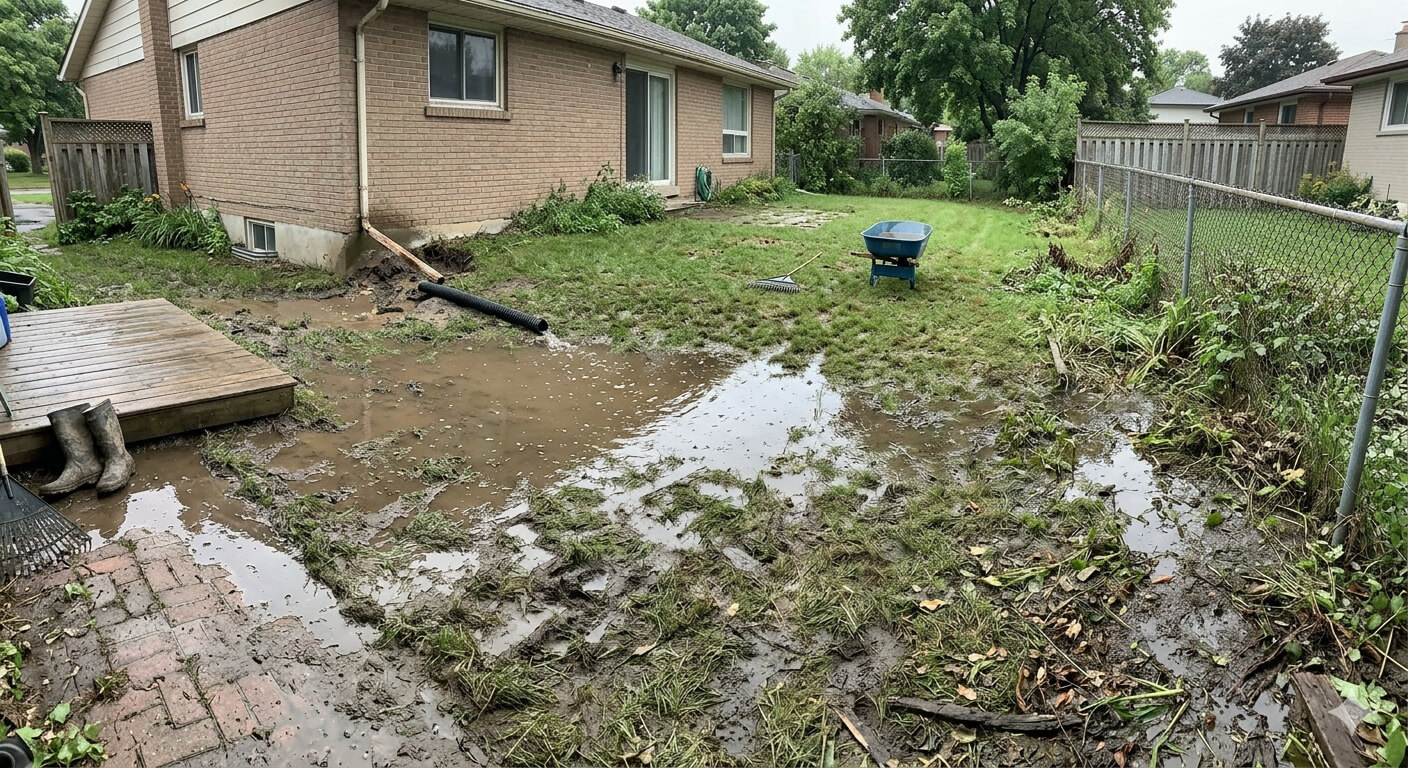
Drainage problems are one of the most common — and most overlooked — issues homeowners face.
At first, it might seem like a minor inconvenience. A little standing water after heavy rain. A soggy patch in the lawn. Maybe some muddy areas that take longer to dry.
But over time, poor drainage can lead to serious problems, including damage to your landscaping, your lawn, and even your home’s foundation.
The good news is that most drainage issues can be fixed — especially if you catch them early.
In this guide, we’ll walk through the signs of drainage problems, what causes them, and the most effective ways to fix them.
Signs You Have a Drainage Problem
Before you can fix drainage issues, you need to recognize them.
Here are some of the most common warning signs:
1. Standing Water After Rain
If water sits in your yard for hours or even days after rainfall, it’s a clear sign that drainage is not working properly.
2. Soggy or Muddy Areas
Areas that stay wet longer than the rest of your yard may indicate poor soil drainage or improper grading.
3. Water Near Your Foundation
This is one of the most serious issues. Water collecting near your home can lead to:
- Foundation cracks
- Basement leaks
- Structural damage over time
4. Erosion or Washed-Out Areas
If you notice soil being moved or washed away, it means water is not being controlled properly.
5. Patchy or Dying Grass
Too much water can suffocate grass roots, leading to uneven growth or dead patches.
What Causes Yard Drainage Problems?
Understanding the root cause is key to choosing the right solution.
Improper Grading
Your yard should slope away from your home. If it doesn’t, water naturally flows toward your foundation instead of away from it.
Compacted Soil
Over time, soil can become compacted, preventing water from absorbing properly.
Poor Downspout Placement
If your gutters discharge water too close to your home, it can overwhelm the surrounding soil.
Low Spots in the Yard
Depressions in your yard collect water and create pooling areas.
Heavy Clay Soil
Clay soil drains slowly, making it more prone to water retention.
How to Fix Drainage Problems in Your Yard
The right solution depends on the severity and cause of the issue.
Regrading the Yard
Regrading is one of the most effective solutions for long-term drainage problems.
What It Does
It reshapes the slope of your yard so water flows away from your home and toward appropriate drainage areas.
When It’s Needed
- Water flows toward your foundation
- Large areas of standing water
- Uneven yard surface
Why It Works
Water follows gravity. Fixing the slope fixes the flow.
Installing a French Drain
A French drain is a popular and highly effective drainage solution.
How It Works
It uses a perforated pipe buried in gravel to redirect water away from problem areas.
Best For
- Persistent water pooling
- Areas that don’t drain naturally
- Around foundations or patios
Benefits
- Long-lasting solution
- Works below the surface
- Keeps yard looking clean
Extending Downspouts
Sometimes, the problem starts right at your roof.
What It Does
Redirects water from your gutters farther away from your home.
Why It Matters
Without proper extensions, thousands of gallons of water can collect near your foundation over time.
Creating Swales or Drainage Paths
A swale is a shallow channel designed to guide water.
Best For
- Large properties
- Natural water flow control
- Preventing erosion
Swales can be designed to blend naturally into your landscaping.
Installing Catch Basins
Catch basins collect water and redirect it through underground pipes.
Ideal For
Low spots in the yard Areas where water collects quickly Hardscape areas like patios
Adding Decorative Stone Drainage Areas
This is a functional and aesthetic solution.
What It Does
Uses stone beds to absorb and disperse water while improving the look of your yard.
Best For
- Around patios
- Along foundation edges
- Low-maintenance landscaping
Why You Should Fix Drainage Problems Early
Waiting too long can turn a simple fix into a costly repair.
Potential Risks
- Foundation damage
- Basement flooding
- Mold and mildew issues
- Landscape erosion
- Patio or hardscape shifting
The longer water is allowed to sit or flow incorrectly, the more damage it can cause.
Drainage & Hardscaping: Why They Go Together
If you’re planning a patio or landscaping upgrade, drainage should always come first.
A beautiful patio won’t last if water is not properly managed underneath it.
That’s why professional installations always include:
- Proper grading
- Drainage planning
- Base preparation
Skipping these steps leads to long-term issues like sinking and shifting.
DIY vs Professional Drainage Solutions
Some minor issues can be handled with simple fixes, like extending downspouts.
However, more complex problems — especially those involving grading or underground drainage — require professional expertise.
Improper installation can make the problem worse rather than better.
When to Call a Professional
You should consider professional help if:
- Water is near your foundation
- You have recurring drainage issues
- Your yard has large pooling areas
- You’re planning a patio or landscaping project
Final Thoughts
Drainage problems don’t fix themselves — they get worse over time.
The sooner you identify and address the issue, the easier and more cost-effective the solution will be.
Whether it’s a simple fix or a full yard regrading, proper drainage is one of the most important investments you can make in your property.
Ready to Fix Your Yard Drainage?
At Hawkes Landscaping, we specialize in:
- Yard grading and leveling
- Drainage system installation
- Patio and hardscape preparation
- Full landscape solutions
If you’re dealing with standing water or drainage issues, we’re here to help.
📩 Contact us today to schedule a consultation.