
Hydroseeding vs. Traditional Seeding: Which Is Right for Your Lawn?
Introduction: Choosing the Best Way to Grow a Healthy Lawn
Whether you’re building a new home, repairing lawn damage, or starting fresh after a landscaping project, establishing healthy grass is one of the most important steps toward creating a beautiful outdoor space.
Two of the most common methods are traditional seeding and hydroseeding. While both can produce attractive lawns, they differ in application, growth speed, coverage, and overall performance.
Understanding these differences will help you choose the best option for your property, budget, and long-term landscaping goals.
What Is Traditional Seeding?
Traditional seeding involves spreading grass seed across prepared soil, either by hand or with a mechanical spreader. It’s a common method for establishing new lawns and repairing smaller areas.
Benefits include:
- Lower upfront cost
- Simple application process
- Ideal for small lawn repairs
- Wide variety of grass seed options
However, traditional seeding often requires more maintenance during the early growing stages. Wind, heavy rain, birds, and uneven watering can affect seed distribution and germination.
What Is Hydroseeding?
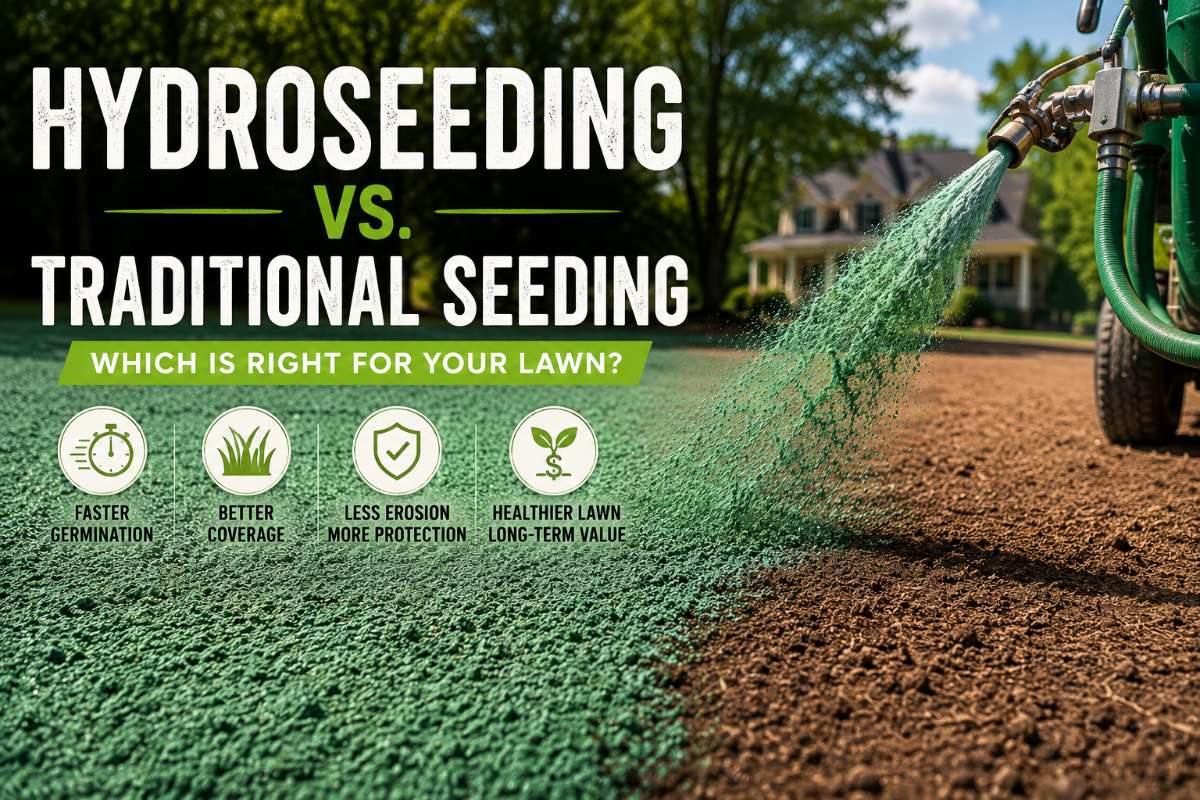
Hydroseeding uses a specialized machine to spray a mixture of grass seed, mulch, fertilizer, water, and bonding agents evenly across the soil.
The mulch helps retain moisture while protecting the seeds from erosion and harsh weather conditions.
Hydroseeding is commonly used for:
- New construction properties
- Lawn restoration projects
- Large residential lawns
- Commercial landscapes
- Sloped areas prone to erosion
The result is more consistent coverage and improved growing conditions.
Growth Speed and Coverage
One of the biggest advantages of hydroseeding is its ability to create even seed distribution.
Compared to traditional seeding, hydroseeding often provides:
- Faster germination
- Better moisture retention
- More uniform grass growth
- Reduced soil erosion
- Improved seed-to-soil contact
While weather and maintenance still play important roles, hydroseeded lawns typically establish more evenly than lawns started with dry seed alone.
Which Option Is More Cost-Effective?
Traditional seeding usually has the lowest initial cost, making it a good choice for smaller projects.
Hydroseeding costs more upfront because it requires specialized equipment and materials. However, many property owners find the investment worthwhile due to better coverage, healthier establishment, and fewer areas requiring reseeding.
Choosing the right option depends on your property’s size, condition, and long-term goals.
Which Lawn Is Easier to Maintain?
Regardless of the method you choose, proper watering and maintenance are essential during the establishment phase. Hydroseeded lawns often require less reseeding because the mulch blanket helps protect the seed during early growth.
Both methods benefit from:
- Consistent watering
- Limited foot traffic
- Proper mowing height
- Seasonal fertilization
- Weed management
Following the recommended care schedule gives your new lawn the best chance for long-term success.
When Should You Choose Hydroseeding?
Hydroseeding is often the preferred choice if you:
- Need to establish a large lawn
- Are restoring a property after construction
- Want more consistent grass coverage
- Have sloped areas susceptible to erosion
- Prefer faster, more uniform results
For smaller patch repairs or limited budgets, traditional seeding may still be an excellent solution.
Final Thoughts: Invest in the Right Start for Your Lawn
A healthy lawn begins with choosing the right establishment method. While traditional seeding remains a reliable option for many projects, hydroseeding offers faster, more even coverage and excellent results for larger landscapes and lawn restoration.
At Hawkes Landscaping, we provide professional hydroseeding and lawn restoration services designed to help homeowners and businesses achieve lush, healthy lawns that last. Whether you’re starting from bare soil or revitalizing an existing yard, our team can recommend the best solution for your property and help bring your landscape to life.