
Landscaping After New Construction: How to Turn a Bare Yard Into a Finished Property
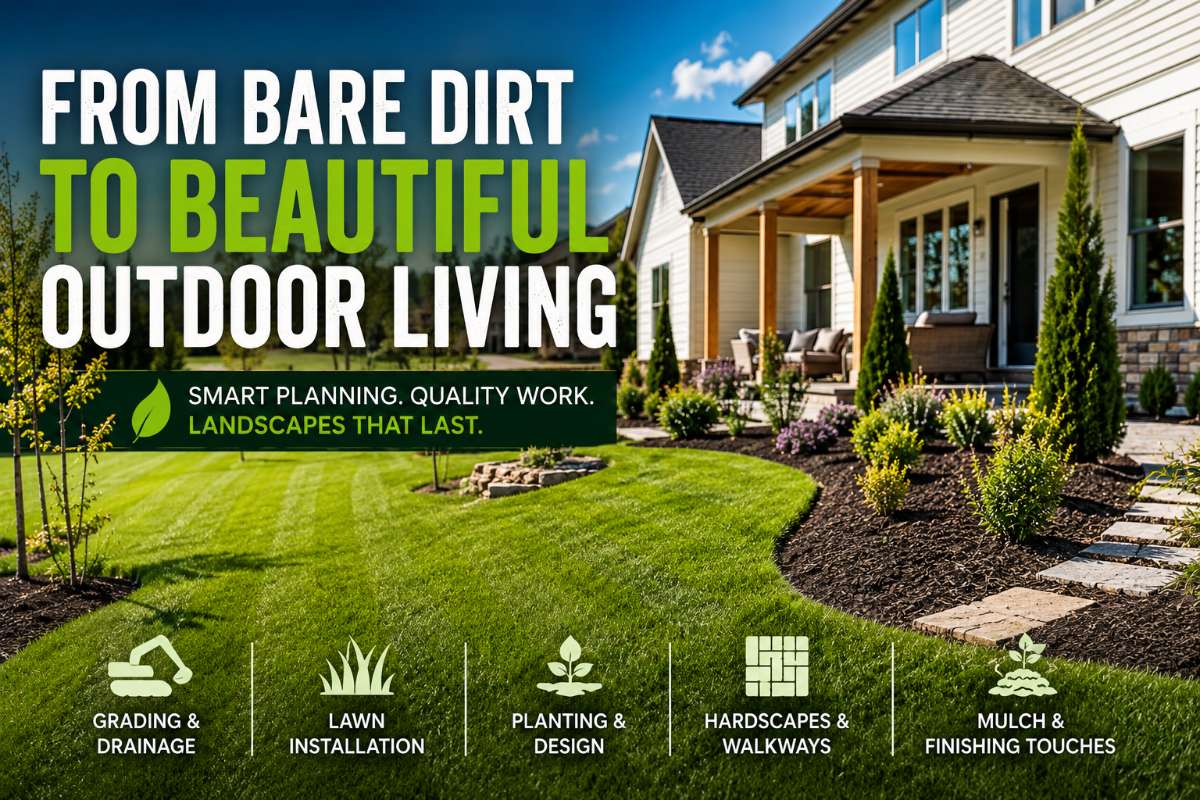
Introduction: Your New Home Is Finished—But What About the Yard?
Building a new home is exciting. After months of planning, construction, and decisions, you finally get to see your vision come together. Then you step outside.
Instead of the beautiful lawn and welcoming landscape you imagined, you may be looking at bare soil, construction debris, uneven ground, muddy areas, and very little greenery.
This is completely normal with many new construction properties. While the house may be finished, the surrounding landscape often still needs significant work before the property truly feels complete.
The good news is that a bare yard is also a blank canvas.
With proper planning, you can transform an unfinished new construction yard into a healthy, attractive, and functional outdoor space that complements your home and adds long-term value to your property.
The key is completing each step in the right order.
1. Start With Proper Grading and Drainage
Before planting grass, installing shrubs, or building landscape beds, it’s important to make sure water moves properly across your property. Construction equipment can compact soil and change the natural grade of the land. If these issues aren’t addressed, rainwater may collect in low areas or flow toward places where you don’t want it.
Potential problems include:
- Standing water
- Muddy areas
- Soil erosion
- Poor lawn growth
- Water collecting near the foundation
- Washed-out landscape beds
Proper grading creates a foundation for everything that comes afterward.
A professional landscaper can evaluate the property and determine whether grading or drainage improvements should be completed before installing the rest of the landscape.
Getting this step right from the beginning can help prevent expensive corrections later.
2. Prepare the Soil Before Establishing a Lawn
A beautiful lawn doesn’t begin with grass seed.
It begins with healthy soil.
After construction, the soil surrounding a new home may be heavily compacted from trucks, excavators, and other equipment. There may also be rocks, construction debris, or uneven areas that need to be addressed.
Proper soil preparation can help improve:
- Root development
- Water absorption
- Drainage
- Seed establishment
- Overall lawn health
Skipping soil preparation and immediately spreading seed can result in thin grass, bare areas, poor germination, and an unhealthy lawn. Taking the time to properly prepare the site gives your new lawn a much stronger start.
3. Establish a Healthy Lawn
Once grading and soil preparation are complete, it’s time to establish the lawn.
Depending on the property and project, homeowners may consider traditional seeding or hydroseeding.
Hydroseeding is particularly useful for many new construction properties because a mixture of grass seed, mulch, fertilizer, water, and other materials can be applied evenly across large areas.
Benefits of hydroseeding may include:
- Consistent seed distribution
- Good seed-to-soil contact
- Moisture retention
- Erosion protection
- Efficient coverage of larger areas
Regardless of the establishment method, new lawns require consistent care during the early stages. Following proper watering and maintenance recommendations is essential for encouraging strong root development and healthy grass growth.
4. Create Defined Landscape Beds
Grass alone rarely makes a new property feel finished.
Landscape beds help create structure, dimension, color, and visual interest around the home.
Beds can be incorporated around:
- Foundations
- Front entrances
- Walkways
- Patios
- Property boundaries
- Trees
- Outdoor living areas
Instead of randomly adding plants around the yard, consider how each bed contributes to the overall design.
Curved or defined edges, thoughtful plant placement, and fresh mulch can quickly transform a basic new construction property into a landscape that feels established and intentional.
5. Choose Trees and Shrubs With the Future in Mind
One of the most common landscaping mistakes is choosing plants based only on how they look today.
Trees and shrubs grow.
A small shrub planted beside the house may eventually cover a window. A young tree placed too close to a walkway may create problems as its canopy and root system mature.
When selecting plants, consider:
- Mature height
- Mature width
- Sunlight requirements
- Soil conditions
- Drainage
- Maintenance needs
- Seasonal appearance
- Placement around structures
Strategically placed trees and shrubs can also provide shade, privacy, wind protection, and visual screening. Planning for mature growth helps create a landscape that continues to look attractive years after installation.
6. Add Walkways and Hardscape Features
Once the major landscape layout has been planned, hardscape features can improve both the appearance and functionality of the property.
Depending on your needs, these might include:
- Walkways
- Patios
- Retaining walls
- Landscape borders
- Steps
- Outdoor gathering areas
Hardscaping helps connect different areas of the property while creating usable outdoor spaces.
For example, a walkway can create a natural path between the driveway and backyard, while a patio can turn an unused area into a place for relaxing, dining, and entertaining.
Planning these elements early is important because installing them after completing the lawn and planting beds may require disturbing finished areas.
7. Use Mulch to Create a Finished Look
Few landscaping improvements create an immediate visual difference quite like fresh mulch.
Mulch gives planting beds a clean, polished appearance while also providing practical benefits.
Properly applied mulch can help:
- Retain soil moisture
- Reduce weed growth
- Protect plant roots
- Moderate soil temperature
- Improve the appearance of landscape beds
Mulch can also create contrast between the lawn, plants, and home, making newly installed landscaping appear more established.
It’s one of the finishing touches that helps turn a construction site into a completed property.
8. Think About How You’ll Actually Use Your Yard
New construction landscaping shouldn’t only be about making the property look attractive.
It should also support how you want to live outdoors.
Ask yourself:
Do you want space for children to play?
Would you like more privacy from neighboring properties?
Do you envision entertaining outdoors?
Would you prefer a large lawn or more planting areas?
Do you need pathways connecting different areas?
Would shade make certain parts of the yard more comfortable?
Thinking about these questions early allows your landscape to be designed around your lifestyle rather than simply filling empty space.
The result is an outdoor environment that’s both beautiful and useful.
9. Plan for Ongoing Landscape Maintenance
Installing a new landscape is only the beginning.
Young lawns, trees, shrubs, and planting beds need consistent care while they become established.
Regular maintenance may include:
- Watering
- Mowing
- Weed management
- Pruning
- Mulch maintenance
- Seasonal cleanup
- Plant health monitoring
- Fertilization when appropriate
Proper maintenance protects the investment you’ve made in your new landscape and helps prevent small problems from becoming larger ones.
As trees and shrubs mature, maintenance requirements may also change.
A long-term approach helps your landscape continue improving rather than gradually becoming overgrown or unhealthy.
Why Planning the Entire Landscape First Can Save Money
It’s tempting to landscape a new construction property one project at a time without creating an overall plan.
But the order matters.
Imagine installing a beautiful new lawn and then discovering that drainage work requires excavation across it.
Or planting expensive shrubs before deciding where a walkway needs to go.
Or completing landscape beds only to have heavy equipment cross them during a later hardscape project.
These situations can create unnecessary costs and duplicate work.
A complete landscape plan helps determine the proper sequence:
Grading and drainage → soil preparation → hardscaping → lawn establishment → planting → mulch → ongoing maintenance
Even if you don’t complete every project at once, knowing the long-term plan can help ensure today’s improvements don’t interfere with tomorrow’s projects.
When Should You Call a Professional Landscaper?
Some homeowners enjoy completing smaller landscaping projects themselves.
However, new construction properties often present challenges that aren’t immediately obvious.
Consider professional help if your property has:
- Significant grading needs
- Standing water
- Drainage concerns
- Large areas of bare soil
- Severe soil compaction
- Sloped terrain
- Erosion problems
- Extensive lawn installation needs
- Multiple landscaping projects that need to work together
An experienced landscaping team can evaluate the entire property and help determine what should happen first. That can save time, prevent expensive mistakes, and create a more cohesive finished landscape.
Final Thoughts: Turn Your New House Into a Complete Home
When construction ends, your outdoor transformation is just beginning.
A bare yard may not look impressive today, but with proper grading, healthy lawn establishment, thoughtfully designed planting beds, carefully selected trees and shrubs, and functional hardscaping, it can become one of the most enjoyable parts of your property.
The most important thing is to start with a plan.
Address the fundamentals first, complete projects in the correct order, and think about how your landscape should function years from now—not just how it should look today.
At Hawkes Landscaping, we help property owners transform unfinished outdoor spaces into beautiful, functional landscapes designed for long-term enjoyment. Whether your new construction property needs grading, lawn establishment, hydroseeding, planting, hardscaping, or a complete landscape transformation, professional planning can help take your property from bare dirt to a finished landscape you can be proud of.