
Why the Best Landscapes Are Designed Around How You Actually Live
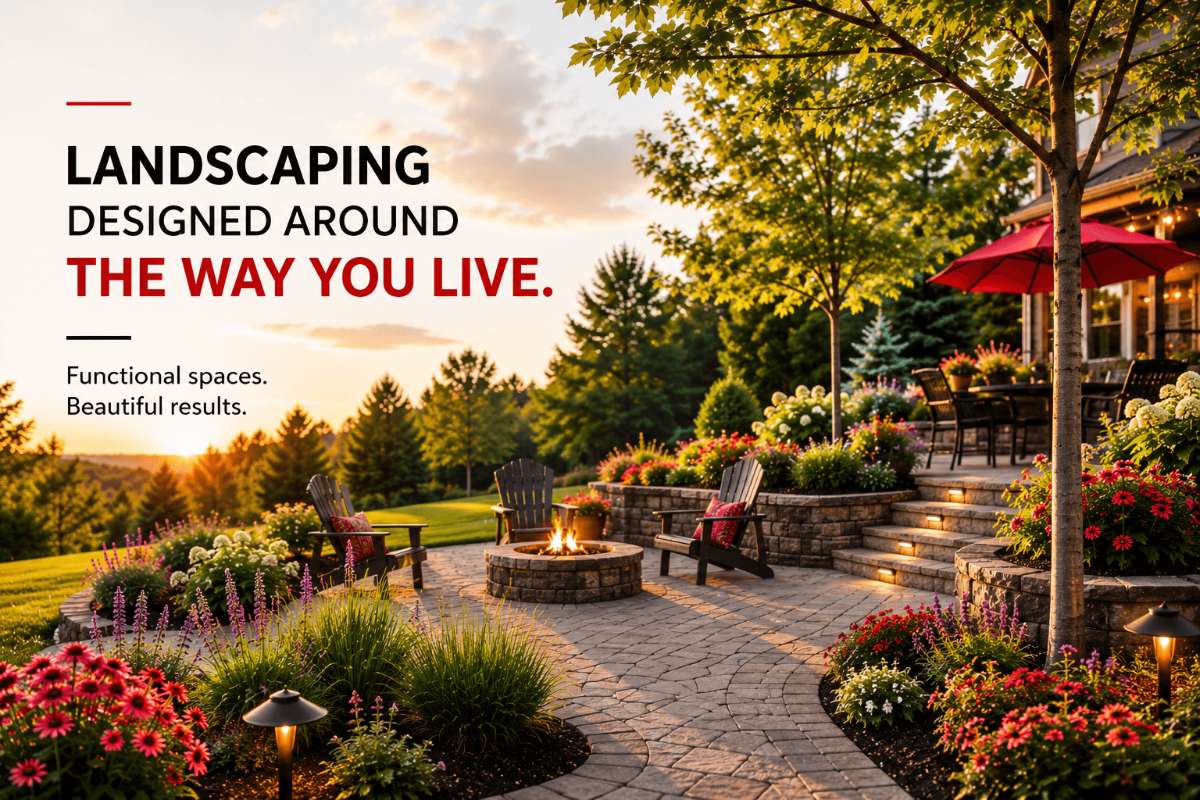
Introduction: Your Landscape Should Work for You
A beautiful landscape can completely change the way a property looks.
But the best landscapes do something more important: they make the property work better for the people who live there.
Two homeowners can have nearly identical yards but need completely different landscape designs. One family may want an open lawn where children can play. Another may prefer a private patio surrounded by plantings. Someone else may want attractive landscaping that requires as little maintenance as possible.
That’s why good landscape design shouldn’t begin with choosing plants or pavers.
It should begin with one simple question:
How do you want to use your outdoor space?
When your landscape is planned around your lifestyle, every element can serve a purpose while contributing to a cohesive, attractive property.
1. Start With How You Use Your Yard
Before deciding what your landscape should look like, think about what you actually do outside.
Do you regularly entertain friends and family?
Do your children need room to run and play?
Do you spend weekends gardening?
Would you rather relax outdoors than maintain it?
Do you need more privacy from neighboring properties?
Are there parts of your yard you rarely use because they’re difficult to access?
Your answers can help determine how the property should be organized.
Instead of simply filling empty areas with plants, a thoughtful landscape plan creates spaces that support your everyday routine.
2. Families With Kids May Need More Open Space
For families with children, an outdoor space often needs to be flexible.
A large, open lawn can provide room for games, play equipment, activities, and family gatherings.
Landscape planning can help balance those functional areas with attractive planting beds and other features.
Considerations may include:
- Open lawn areas
- Clear sightlines from the home
- Durable grass
- Defined play areas
- Safe pathways
- Shade
- Plant placement around activity zones
The goal isn’t to eliminate landscaping to make room for children.
It’s to design the landscaping around how the family uses the property.
That way, the yard can still feel polished while remaining practical for everyday life.
3. If You Love Entertaining, Create Places to Gather
For homeowners who enjoy hosting, the backyard can become another living area.
Instead of treating a patio as an isolated feature, consider how people will move between the house, lawn, seating areas, and other parts of the property.
An entertainment-focused landscape might incorporate:
- Patios
- Outdoor seating
- Walkways
- Landscape lighting
- Planting beds
- Defined gathering areas
- Privacy landscaping
- Open lawn space for larger gatherings
Thoughtful planning creates natural connections between these spaces.
Guests shouldn’t have to walk through planting beds or cross muddy sections of lawn to reach the patio.
When hardscaping and landscaping are planned together, the entire backyard can feel like an extension of the home.
4. Privacy Can Be Designed Into the Landscape
Privacy doesn’t always require building a tall fence.
Trees, shrubs, ornamental grasses, and strategically positioned landscape beds can help create natural separation between neighboring properties.
Privacy landscaping may be useful around:
- Patios
- Pools
- Outdoor dining areas
- Backyard seating
- Property boundaries
- Windows facing neighboring homes
Plant selection matters.
Some homeowners may want year-round screening, while others may prefer seasonal greenery that feels lighter and more open.
It’s also important to consider mature plant size.
Planting shrubs too closely together may provide quick coverage, but it can create overcrowding and maintenance problems later.
A well-planned privacy landscape considers both how the plants look today and how they will perform as they mature.
5. Low-Maintenance Landscaping Should Be Designed That Way From the Start
Not everyone wants to spend every weekend working in the yard.
And that’s completely fine.
A low-maintenance landscape doesn’t have to look empty or boring. It simply requires thoughtful choices.
That might include:
- Selecting plants suited to the property
- Using properly sized landscape beds
- Applying mulch
- Reducing difficult-to-mow areas
- Choosing plants with manageable maintenance needs
- Creating clean landscape edges
- Planning efficient lawn areas
Plant placement can make a major difference.
A shrub that constantly needs trimming because it was planted in the wrong location isn’t truly low maintenance.
Designing around mature plant sizes and natural growth habits can reduce unnecessary work later.
6. Think About How People Move Through the Property
One part of landscape design that is easy to overlook is movement.
How do you get from the driveway to the backyard?
How do guests reach the patio?
Is there a natural path between outdoor areas?
Do people repeatedly walk across the same section of lawn?
When people naturally create their own routes through a yard, it may be a sign that the landscape isn’t supporting how the property is actually used.
Walkways, steps, patios, and other hardscape elements can create clear connections between spaces.
Good circulation makes a landscape feel more comfortable and intentional.
It can also help protect lawns and planting beds from unnecessary foot traffic.
7. Solve Problem Areas Instead of Designing Around Them
Nearly every property has areas that are more challenging than others.
Maybe part of the yard stays wet after heavy rain.
Perhaps a steep slope is difficult to mow.
Maybe an awkward corner never gets used.
Or an area near the house feels unfinished.
Instead of ignoring these spaces, landscape design can turn them into opportunities.
Depending on the property, solutions might involve:
- Grading
- Drainage improvements
- Retaining walls
- Landscape beds
- Lawn restoration
- Hydroseeding
- Planting
- Walkways or steps
The right solution depends on why the area isn’t working in the first place.
Addressing the underlying issue can make more of your property usable while improving the overall landscape.
8. Plan for the Way Your Needs May Change
A landscape isn’t temporary.
Trees grow. Shrubs mature. Families change. Outdoor living habits evolve.
The backyard that works perfectly today may need to serve a different purpose five or ten years from now.
That’s why flexibility matters.
For example, an open lawn used as a children’s play area today might eventually become space for a patio expansion, garden, or additional landscape beds.
Planning ahead doesn’t mean predicting every future project.
It means avoiding design decisions that unnecessarily limit your options.
9. Beauty and Function Should Work Together
Functional landscaping doesn’t mean sacrificing appearance.
In fact, some of the most attractive landscapes are beautiful precisely because every element feels like it belongs.
A retaining wall can solve a slope problem while adding dimension.
A walkway can improve accessibility while creating visual direction.
Trees can provide privacy while adding height and seasonal interest.
Landscape beds can soften the appearance of a home while defining outdoor areas.
A lawn can provide open recreational space while creating contrast against planting beds and hardscaping.
When function and aesthetics are considered together, the result feels intentional rather than decorated.
Questions to Ask Before Starting Your Next Landscape Project
Before choosing plants or materials, take some time to think about the bigger picture.
Ask yourself:
- How do we currently use our yard?
- What do we wish we could do outside?
- Which areas of the property aren’t working?
- How much maintenance do we realistically want?
- Do we need more privacy?
- Do we need more usable space?
- Are drainage or grading issues limiting the yard?
- Will our needs change over the next several years?
- Are there future projects we should plan for now?
These questions can provide much more direction than simply asking, “What would look good here?”
Why Professional Landscape Planning Makes a Difference
Landscaping involves more than selecting attractive plants.
The grade of the property, drainage, sunlight, soil conditions, plant growth, traffic patterns, hardscape placement, maintenance requirements, and long-term plans can all influence the final result.
A professional landscaper can evaluate how these pieces work together.
That can help prevent common problems such as:
- Plants outgrowing their spaces
- Poor drainage
- Awkward walkways
- Difficult maintenance
- Underused outdoor areas
- Hardscape projects interfering with landscaping
- Expensive changes later
Even when a landscape is installed in phases, having an overall plan can help each project contribute to the same long-term vision.
Final Thoughts: Design for Your Life, Not Just the View
The best landscape isn’t necessarily the one with the most plants, the biggest patio, or the most elaborate features.
It’s the one that works for you.
Your outdoor space should reflect how your family relaxes, entertains, plays, moves, and spends time at home.
That might mean creating an open lawn for children, adding privacy around a patio, transforming a difficult slope, reducing maintenance, or connecting different areas with thoughtfully placed walkways.
When those needs guide the design, beauty becomes part of a much bigger result: an outdoor space you actually enjoy using.
At Hawkes Landscaping, we help homeowners create landscapes that combine appearance, function, and long-term practicality.
Whether you’re improving one problem area or planning a larger landscape transformation, the goal is simple: create an outdoor space that fits the way you live.