
Why Your Yard Has Drainage Problems and What You Can Do About Them
Introduction: That Puddle Might Be Telling You Something
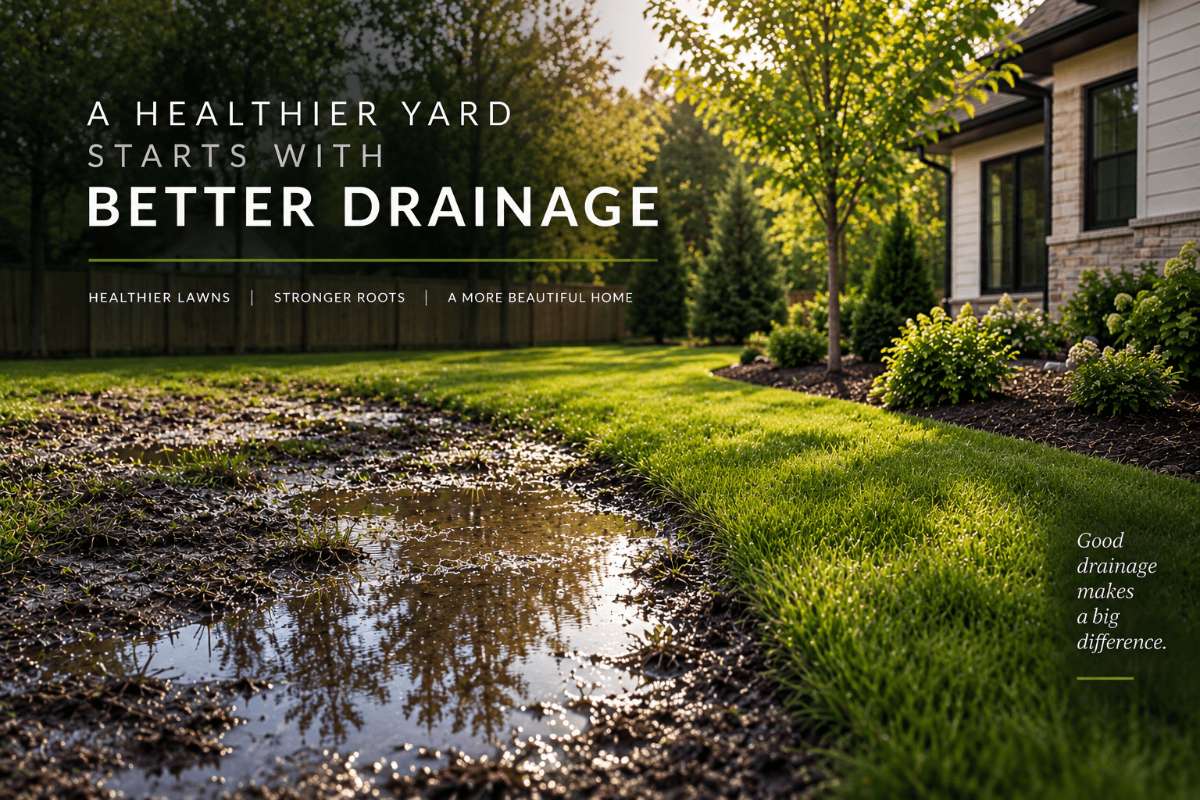
A few puddles immediately after a heavy rain aren’t necessarily a reason to worry. But when water repeatedly collects in the same areas, your lawn stays soggy for days, or soil and mulch wash away after every storm, your yard may have a drainage problem.
Poor drainage is more than an inconvenience.
Water that doesn’t move properly through or away from your landscape can damage grass, stress plants, contribute to erosion, create muddy areas, and potentially cause problems around your home’s foundation.
The challenge is that drainage problems don’t all have the same cause. Simply filling a low spot or adding more soil may temporarily hide the issue without addressing what’s actually happening.
Understanding why water is collecting is the first step toward finding a long-term solution.
Here are some of the most common causes of yard drainage problems, the warning signs to watch for, and what you can do to create a healthier, more functional landscape.
1. Your Yard Isn’t Graded Properly
One of the most common causes of landscape drainage problems is improper grading.
Grading refers to the slope and shape of the land surrounding your home. Ideally, the landscape should direct water away from structures and toward appropriate drainage areas.
When the grade is too flat—or slopes in the wrong direction—rainwater can collect instead of flowing away naturally.
Signs of grading problems may include:
- Water pooling near your home
- Persistent puddles in the lawn
- Soggy areas after rainfall
- Soil washing toward structures
- Water repeatedly collecting in the same locations
Correcting the grade can help redirect water and prevent these areas from remaining saturated.
Because grading affects the foundation of the entire landscape, it’s important to address it before investing heavily in new grass, plants, or other landscape improvements.
2. Your Soil Is Too Compacted
Healthy soil needs enough space between particles for water, nutrients, and oxygen to move through it.
Compacted soil makes this much more difficult.
Heavy equipment, vehicles, frequent foot traffic, and construction activity can compress the ground until water struggles to penetrate the surface.
Instead of soaking into the soil, rainwater may sit on top or run across the property.
Compaction can also make it harder for grass and plant roots to develop properly.
This is particularly common around newly constructed homes where heavy machinery has repeatedly traveled across the property.
Addressing soil conditions before establishing a lawn can significantly improve both drainage and long-term plant health.
3. Low Spots Are Collecting Water
Even a generally well-graded property can develop individual low areas.
These depressions act like small bowls, collecting water every time it rains.
Over time, low spots can develop because of:
- Soil settling
- Construction activity
- Erosion
- Poor initial grading
- Changes to surrounding landscaping
Small depressions may sometimes be corrected relatively easily, while larger or recurring areas may indicate a broader grading or drainage issue.
If you constantly find yourself avoiding the same muddy section of lawn, it’s worth determining why that area remains lower than the surrounding ground.
4. Your Downspouts May Be Sending Water to the Wrong Place
Your roof collects a surprisingly large amount of water during a storm.
Gutters and downspouts are designed to move that water away from the house—but problems arise when the downspout simply releases water beside the foundation or into an already saturated area.
Watch what happens during the next heavy rainfall.
Does water from your downspouts:
- Collect near the foundation?
- Flow into a landscape bed?
- Create a muddy channel?
- Pool in the lawn?
- Wash away mulch or soil?
Redirecting this water toward a more appropriate drainage location may help prevent repeated saturation and erosion.
However, the right solution depends on the layout and grade of the property.
5. Water Is Washing Away Your Soil and Mulch
Drainage problems aren’t always about standing water.
Sometimes water moves too quickly.
If rainfall repeatedly carries mulch, topsoil, or gravel downhill, your landscape may be experiencing erosion.
You may notice:
- Exposed plant roots
- Channels forming in the soil
- Mulch collecting at the bottom of slopes
- Bare areas developing in the lawn
- Soil accumulating on walkways
- Landscape beds losing their shape
Erosion gradually removes valuable topsoil and can make it increasingly difficult for plants and grass to thrive.
Depending on the property, solutions may involve adjusting the grade, slowing water movement, improving planting, adding retaining features, or creating a better route for runoff.
6. Your Landscape Design May Be Blocking Natural Water Flow
Landscapes change over time.
New patios, walkways, retaining walls, planting beds, sheds, additions, and other improvements can affect how water moves through a property.
A feature that seems unrelated to drainage can unintentionally redirect runoff into another part of the yard.
For example, a new hardscape area may prevent water from soaking into the ground where it previously did.
A landscape bed may interrupt a natural drainage path.
A retaining wall may change how water moves down a slope.
This is why drainage should be considered whenever major landscape improvements are planned.
A beautiful landscape should work with the property’s natural water movement—not against it.
7. Your Lawn Is Staying Wet for Too Long
A lawn needs water to stay healthy, but constantly saturated soil can create problems.
If certain areas remain soft or soggy long after the rest of the property has dried, excessive moisture may be affecting the grass beneath the surface.
Constantly wet conditions can contribute to:
- Weak grass roots
- Thin turf
- Muddy patches
- Lawn disease
- Difficult mowing conditions
- Increased weed growth
Repeatedly adding grass seed to these areas won’t necessarily solve the problem.
If drainage is the underlying issue, improving how water moves through the landscape should come first.
Once the drainage problem is addressed, lawn restoration or hydroseeding can help establish healthy grass in the repaired area.
Why Ignoring Yard Drainage Can Become Expensive
Drainage problems rarely improve on their own.
In many cases, repeated exposure to excess water gradually makes the problem worse.
A small erosion channel can become larger.
A constantly wet section of lawn can turn into a permanent muddy area.
Mulch that washes away may need to be replaced repeatedly.
Plants sitting in saturated soil can decline.
Water repeatedly collecting near structures may create additional concerns.
Addressing the cause early is often much easier than restoring a landscape after years of water damage.
What Are the Best Solutions for Yard Drainage Problems?
There isn’t one drainage solution that works for every property.
The correct approach depends on where the water originates, how the property is graded, the type of soil, the surrounding landscape, and where the water can safely be directed.
Depending on the situation, professional drainage improvements may involve:
- Regrading portions of the property
- Correcting low areas
- Improving soil conditions
- Redirecting runoff
- Extending or redirecting downspouts
- Installing appropriate drainage systems
- Using retaining features where needed
- Adding erosion-control landscaping
- Restoring damaged lawn areas afterward
The most important step is identifying the actual cause before choosing the solution.
Treating only the visible symptom may result in the same drainage problem returning after the next major storm.
Simple Signs You Shouldn’t Ignore
You don’t need to be a landscaping professional to notice when something isn’t right.
Walk around your property after a heavy rainfall and look for:
- Standing water that remains for an extended period
- Areas that feel unusually soft underfoot
- Water collecting near the house
- Mulch or soil washing away
- Small erosion channels
- Grass that repeatedly dies in wet areas
- Muddy sections that never seem to dry
- Water flowing across walkways or outdoor living areas
- Exposed roots
- Changes in the slope of your lawn
These clues can help identify drainage concerns before they become larger problems.
When Should You Call a Professional?
Some minor drainage issues may be straightforward.
Others require understanding the property’s overall grade and how water moves across the landscape.
Consider having the property professionally evaluated when you notice:
- Recurring standing water
- Significant erosion
- Drainage problems near your home’s foundation
- Large sections of soggy lawn
- Water flowing toward structures
- Multiple low spots
- Problems that return after previous repairs
- Drainage concerns following construction or landscape renovations
A professional landscaper can look beyond the puddle itself and evaluate what’s causing water to collect in the first place.
That makes it possible to develop a solution designed around your specific property.
Final Thoughts: Don’t Just Get Rid of the Water—Solve Why It’s There
A healthy landscape needs water.
It just needs that water to go where it belongs.
Standing water, soggy grass, erosion, washed-out mulch, and persistent muddy areas are often symptoms of a larger drainage issue. Fixing the visible problem without understanding the cause may provide temporary relief, but it doesn’t necessarily prevent the problem from returning.
The best approach starts with understanding how water moves across your property.
Proper grading, thoughtful landscape design, healthy soil, and appropriate drainage solutions can work together to create an outdoor space that handles rainfall more effectively while protecting your lawn and landscaping.
At Hawkes Landscaping, we help property owners identify landscape challenges and develop practical solutions designed around their property.
If your yard turns into a soggy mess every time it rains, don’t wait for the problem to become more expensive. The right drainage and landscaping approach can help create a healthier, more functional outdoor space built to handle the elements.